
If the wind of Alto Molise had a voice, it would still tell the stories of a proud, free people deeply tied to their mountains. Among the ridges of the Apennines, where dense forests suddenly open up to reveal breathtaking landscapes of stone and silence, stands Pietrabbondante: the great federal sanctuary of the Samnites.
Here, at an altitude of over 1,000 meters (3,280 feet), history and the landscape are not merely observed. They are experienced, leaving an indelible mark on the hearts of travelers who seek to explore beyond the common tourist routes.
The Samnites: the mountain people who challenged Rome
Between the 4th and 1st centuries BC, the Samnites were one of the greatest populations of ancient Italy. Organized in a fierce confederation of tribes and deeply tied to a pastoral and warrior culture, these Oscan-speakers were for generations the primary and most feared rivals of a rising Rome. They even inflicted one of the most humiliating military defeats in Roman history at the Battle of the Caudine Forks in 321 BC, forcing the captured Roman legions to pass under a yoke of spears.
Ancient Roman writers, the victors who wrote the history books, often painted the Samnites as crude, rustic mountaineers. However, the monumental remains of Pietrabbondante reveal a far more complex and sophisticated society: a cultured people capable of executing refined architecture, managing grand public spaces, and developing a profound sense of civic and religious identity.
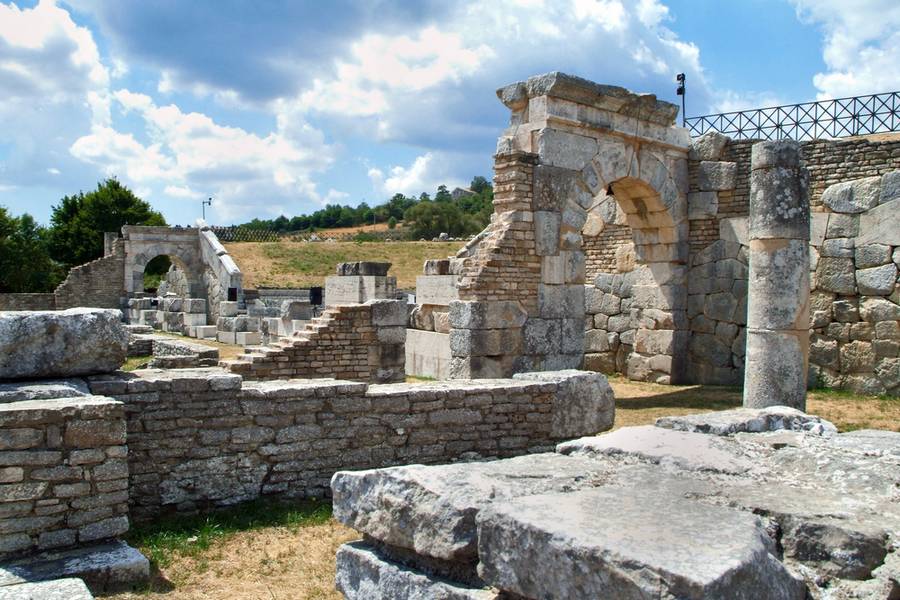
The Sanctuary: architecture in harmony with the Apennines
Built primarily between the late 2nd century BC and the early 1st century BC, the monumental complex of Pietrabbondante stands as the finest surviving masterpiece of Samnite architecture.
The entire sanctuary was designed with a precise philosophy: rather than conquering or dominating the rugged terrain, the structures blend seamlessly into the mountain slopes. The terraces and foundations are crafted from massive limestone blocks, beautifully fitted together using an ancient cyclopean masonry technique that relies purely on gravity, without a single drop of mortar.
Walking through the ruins today, one can still feel a powerful harmony between human genius and the majesty of the wilderness.
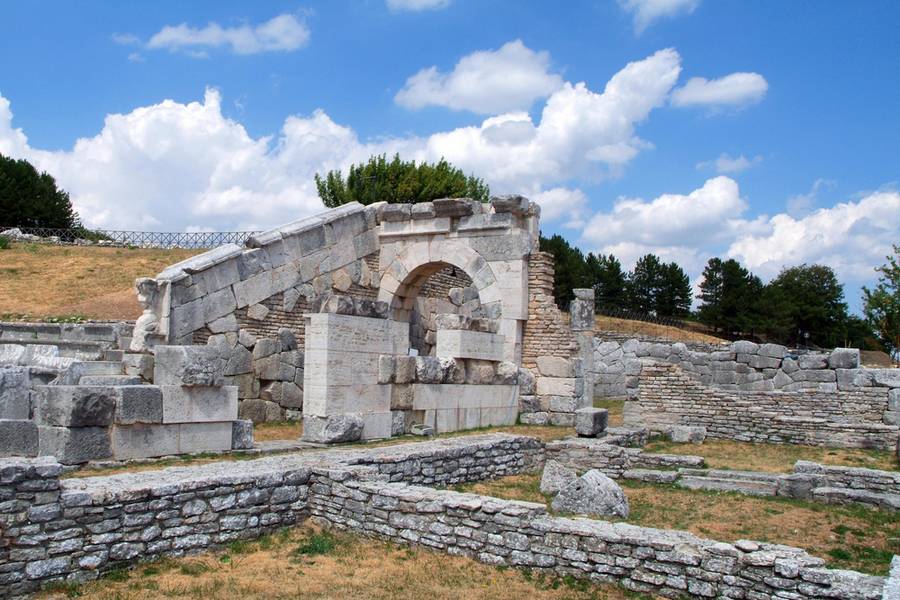

The Theater-Temple: the beating heart of a Nation
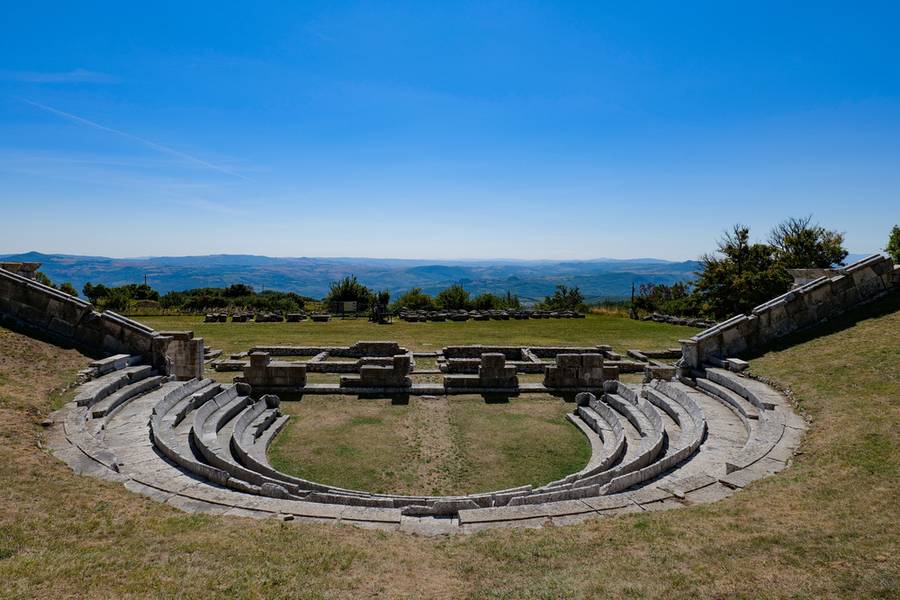
The crown jewel and most dramatic feature of the archaeological site is the grand Theater-Temple complex, an architectural marvel that integrated sacred devotion with civic duty.
The Ancient Theater: Capable of seating roughly 2,500 spectators, the cavea is beautifully carved into the natural hillside. The semicircular stone tiers feature ergonomic curved backrests that uniquely end in elegantly sculpted lion paws. This wasn’t merely a space for Hellenistic drama; it served as the Samnite senate house where supreme magistrates and elites gathered to deliberate federal politics and state laws.
The Great Temple: Towering directly behind the theater on a monumental high podium is the massive Italic temple, likely dedicated to a supreme deity of the Samnite pantheon such as Jupiter or Mars. Standing on its highest steps, the view opens up across an endless sea of rolling green ridges rolling toward the Adriatic Sea, evoking the exact same sense of awe felt by ancient priests over two thousand years ago.
Hidden Details: The Voices of the Ancestors
Among the most captivating aspects of Pietrabbondante are the intimate human traces hidden in the stone. Look closely at the podium blocks, and you can still spot original inscriptions carved in the Oscan alphabet, written from right to left.
These texts immortalize the names of local citizens and magistrates who proudly financed the construction of the sanctuary, proving that deep civic philanthropy flourished here long before Roman assimilation.

Modern village: life anchored to the rocks
The golden era of the sanctuary met a violent end during the Roman civil wars around 80 BC, when the dictator Sulla systematically devastated Samnium to crush the final pockets of Italic resistance. Yet, walking through the site today, it is not the destruction that marks you, but the silent resilience of the stone.
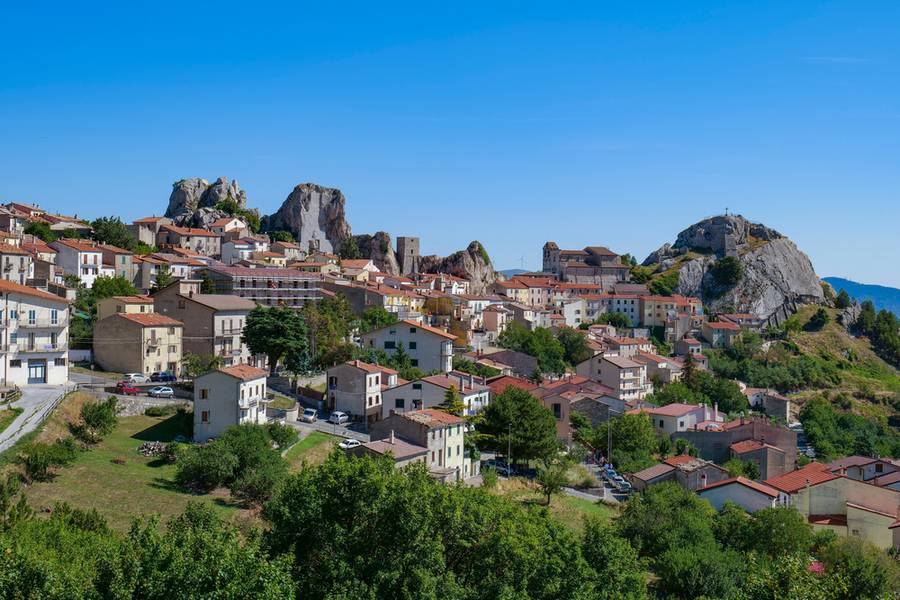
Just a short distance away, the modern village of Pietrabbondante continues to live in the shadow of this ancient heritage. The town clings to the mountain beneath colossal, towering limestone boulders known locally as morge (or mogge), which naturally shelter the medieval stone houses and quiet alleyways below. It is a world that invites slow travel, filled with genuine culinary traditions, pastoral heritage, and a warm local community.
An experience for true travelers
For decades, mainstream tourism has channeled visitors down a well-worn path through Italy’s major cities, completely bypassing the profound history, sweeping landscapes, and untamed beauty of hidden gems like Molise and Abruzzo.
At Italia Sweet Italia, we believe that real travel is an immersive adventure. It is about avoiding the crowds, stepping into living history, learning to make traditional pasta from a local grandmother, and feeling less like a conventional tourist and more like an invited guest. Our small-group journeys are meticulously organized down to the finest detail, allowing you to sit back, feel entirely safe and comfortable, and discover the authentic heart of Italy at an unhurried, relaxing pace.
If these ancient stones have inspired your sense of discovery, visit our our calendar to explore our exclusive experiential tours and start your own unforgettable journey through Italy’s hidden regions!
Ciao for now,
Fabrizio
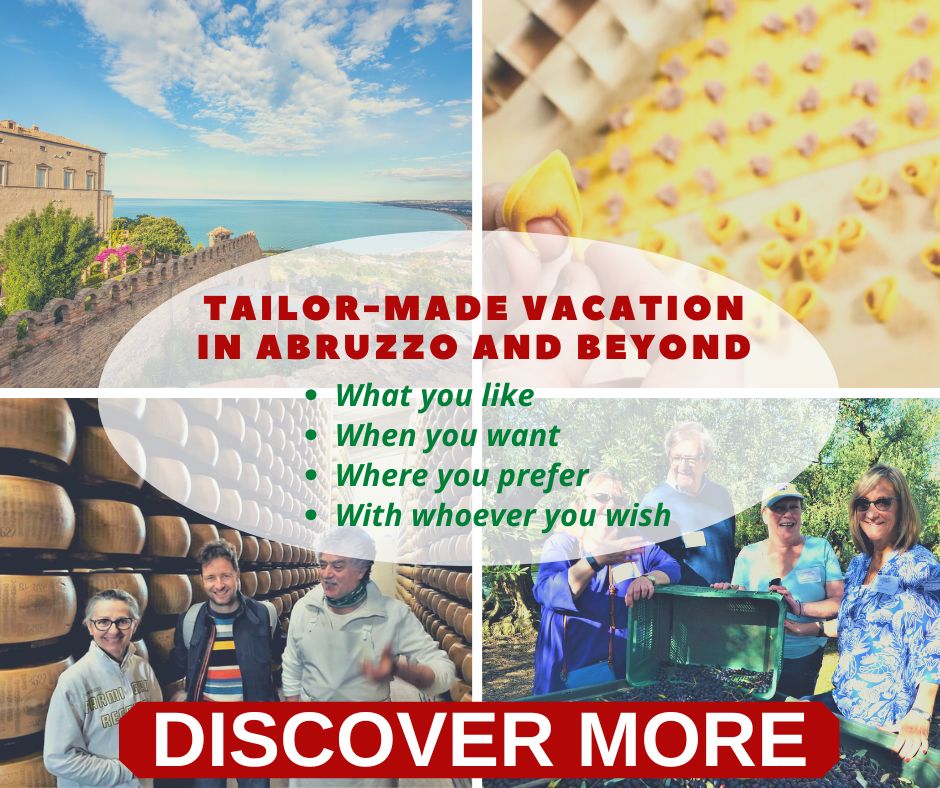
Ready to travel to Abruzzo, Italy?
Get in touch today for more information about our tour. We are ready to help you choose the best options for your dream vacation!
And if you’re not quite ready to make an inquiry, sign up for our free email course to learn everything you need to know about planning a tour of Abruzzo.