
On a simple morning in Vasto, in the heart of Abruzzo, some of my favorite memories begin with a simple scene: flour scattered across the kitchen table, a pot slowly bubbling on the stove, and Mamma Anna Maria getting ready to feed everyone who walks through the door.
Nobody is in a hurry. Someone tastes the sauce, someone reaches for another ingredient, and before long, a conversation begins that has very little to do with cooking. That is how it often happens in an Italian kitchen. Food brings people together, but the real magic lies in everything that happens around it.
Every October 25, World Pasta Day celebrates one of Italy’s most beloved culinary traditions. And if you have ever returned home from Italy wishing you could recreate the flavors you discovered here, you may have wondered where to begin.
The answer might be simpler than you think: start by choosing your pasta a little more carefully.
You do not need to be a professional chef or spend a fortune on specialty ingredients. A few details on the package can help you make a more informed choice, while a handful of simple cooking techniques can make a real difference at the table.
And, as we say in Italy, there is always more to a good plate of pasta than meets the eye.

1. Start with the Ingredients
When you pick up a package of dried pasta, turn it over and read the ingredient list.
Traditional Italian dried pasta is generally made with just two ingredients: durum wheat semolina (semola di grano duro) and water. Simple, familiar ingredients are often a good starting point when you want to understand what you are buying.
You may also come across the word enriched on pasta packages in countries such as the United States and Canada. This usually refers to vitamins and minerals added to the product as part of local food-fortification practices. It does not, by itself, tell you whether the pasta is well made or whether its wheat is of lower quality.
So, what else should you look for?
Consider the protein content. Durum wheat naturally contains protein, including the proteins that form gluten when the dough is made. The amount varies by product, but comparing the nutritional information can help you understand what you are buying. Many dried durum-wheat pastas contain around 12–14 grams of protein per 100 grams, although a higher number alone does not guarantee a better result.
What matters in the pot is how the pasta holds together as it cooks. Well-made pasta should retain its shape and offer a pleasant texture rather than becoming mushy or falling apart.
There is no need to turn grocery shopping into a science experiment. Read the label, compare a few options, and pay attention to the pasta you enjoy eating.

2. Bronze-Drawn Pasta: a little detail that makes a difference
Have you ever made a delicious tomato sauce, only to find that it seems to slide straight off the pasta and collect at the bottom of the plate?
Part of the answer lies in the way the pasta is shaped.
During production, pasta dough is pushed through a mold called a trafila, which gives it its familiar shape. Some producers use bronze dies, while others use dies made with different materials, including Teflon-coated surfaces.
Look for the words “trafilata al bronzo” on the package. Bronze-drawn pasta typically has a rougher, more textured surface than pasta made with smoother dies. That texture can help sauces adhere, making it particularly enjoyable with a simple tomato sauce, a rich ragù, or a dressing made with olive oil and cheese.
It is not a question of one type being right for every dish. Smooth pasta has its place, too. But if you love a sauce that clings to every curve of a penne or every strand of spaghetti, bronze-drawn pasta is well worth trying.
In our kitchen, that is exactly the point: the pasta and the sauce should work together, not sit separately on the plate.

3. Don’t judge Pasta by its color alone
When you picture dried pasta, you may imagine a bright golden-yellow color. But good pasta does not have to look especially vivid to be worth buying.
Depending on the wheat, the production process, and the drying method, dried pasta can range from a warm golden shade to a paler, muted ivory. Some traditional producers favor slower drying at controlled temperatures, while others use faster, higher-temperature processes.
These choices can influence the pasta’s color, aroma, texture, and cooking properties. However, color alone cannot tell you exactly how the pasta was dried or how good it will taste.
Instead of searching for the brightest yellow package on the shelf, look at the whole picture: the ingredients, the producer, the texture of the dry pasta, and the cooking instructions.
If you have the chance, try two different brands side by side. Cook them according to their instructions and notice how they smell, how they feel when you bite into them, and how well they work with your favorite sauce.
Sometimes, the best way to learn about food is simply to taste it.


4. The art of cooking pasta “al dente”
Ask an Italian how to cook pasta, and sooner or later, you will hear two words: al dente.
Literally meaning “to the tooth,” the expression describes pasta that is cooked through but still offers a gentle resistance when you bite into it. It should not be hard or raw in the center, nor should it be so soft that it loses its character.
Here are three simple habits that can help you get it right.
- Start with plenty of water. Use a large pot so the pasta has room to move as it cooks. Salt the water, bring it to a steady boil, and add the pasta.
- Taste before the cooking time is up. The time printed on the package is a useful guide, not a rule that works identically for every pot and every preference. Begin tasting a little before the suggested time, then continue until the texture feels right to you.
- Finish the pasta in the sauce. This is one of my favorite tricks, and it is easier than it sounds. Transfer the pasta to a pan with your warm sauce just before it reaches your preferred texture. Add a small splash of the starchy cooking water and toss everything together for a minute or two, adding more water if needed.
The starch in the water helps the sauce come together and coat the pasta. Instead of simply placing sauce on top, you create a more harmonious dish in which every bite brings the ingredients together.
You do not need complicated equipment or restaurant techniques. Just a little attention, a good pan, and the willingness to taste as you go.

5. “Made in Italy” and the story behind the wheat
A package marked “Made in Italy” tells you something important about where the pasta was produced, but it does not necessarily mean that all the wheat was grown in Italy.
Italian pasta makers may use Italian durum wheat, imported wheat, or a blend of different origins. Imported wheat is not automatically inferior; the quality of the grain and the way it is processed matter, too.
If knowing where your food comes from is important to you, look for clear information about the wheat’s origin. The words “100% grano italiano” indicate that the product is made with Italian-grown wheat.
You may also encounter Pasta di Gragnano IGP, a protected geographical indication associated with the historic pasta-making tradition of Gragnano, near Naples. The designation sets specific requirements for the product and its production, connecting the pasta to a place with a long-established culinary identity.
For me, these labels are not simply technical details. They are an invitation to discover the people, agricultural traditions, and regional stories behind what we eat.
That is one of the pleasures of traveling through Italy: a familiar ingredient can lead you somewhere entirely unexpected.

6. Pasta without gluten: understanding your options
Pasta is part of Italy’s culinary heritage, but not everyone can eat traditional wheat pasta. For people with celiac disease or other dietary needs, discovering Italian food may also mean asking important questions before sitting down at the table.
Fortunately, gluten-free pasta has become widely available, including varieties made from corn, rice, buckwheat, and legumes. The texture and flavor can vary considerably, so it is worth trying different options to find the ones you enjoy most.
But there is an important distinction between choosing a gluten-free product and ensuring that an entire meal has been prepared safely for someone with celiac disease.
Cross-contact can occur during storage, preparation, cooking, or serving. A gluten-free ingredient alone does not guarantee that the finished dish is safe for someone who must avoid even small amounts of gluten.
At Italia Sweet Italia, we believe that hospitality begins with listening. When a traveler tells us about a dietary requirement, we want to understand it and discuss what may be possible during the journey. The practical arrangements depend on the specific activity, kitchen, and restaurant, so any necessary precautions must be discussed and confirmed in advance. We cannot guarantee a completely gluten-free environment or eliminate every risk of cross-contact.
For anyone traveling with celiac disease or a serious food allergy, being clear about these needs before booking is especially important. It helps us have an honest conversation about the experience and its limitations, rather than making promises we cannot responsibly guarantee.
Because a place at the table matters, but so does knowing what is realistically possible.

7. From Abruzzo to Sicily: discover Italy one dough at a time
Learning to choose good pasta and cook it properly is a wonderful place to start. But if you really want to understand Italy’s relationship with pasta, there is no better way than stepping into a local kitchen and making it yourself.
Pasta is one of those rare foods that connects Italians across regions while revealing just how different our culinary traditions can be. The ingredients, shapes, techniques, and sauces change as you travel, and every family seems to have its own way of doing things.
Here in Abruzzo, one of our most beloved specialties is spaghetti alla chitarra. The name comes from a traditional wooden frame strung with fine metal wires. Fresh pasta dough is rolled into a sheet, placed over the strings, and pressed through with a rolling pin, producing long strands with a distinctive square shape. Paired with a rich ragù, it is a dish that brings together the flavors of our region and the traditions of our family kitchen.
But the story does not end in Abruzzo.
Throughout Italy, making pasta by hand is an opportunity to discover a region from the inside. In Puglia, traditional pasta shapes are closely connected to local ingredients and everyday cooking. In Le Marche, handmade preparations and family recipes offer another perspective on the relationship between food and place. In Sicily, the island’s distinctive culinary influences come together in dishes shaped by centuries of cultural exchange. And in Liguria, local ingredients and regional techniques tell their own story.
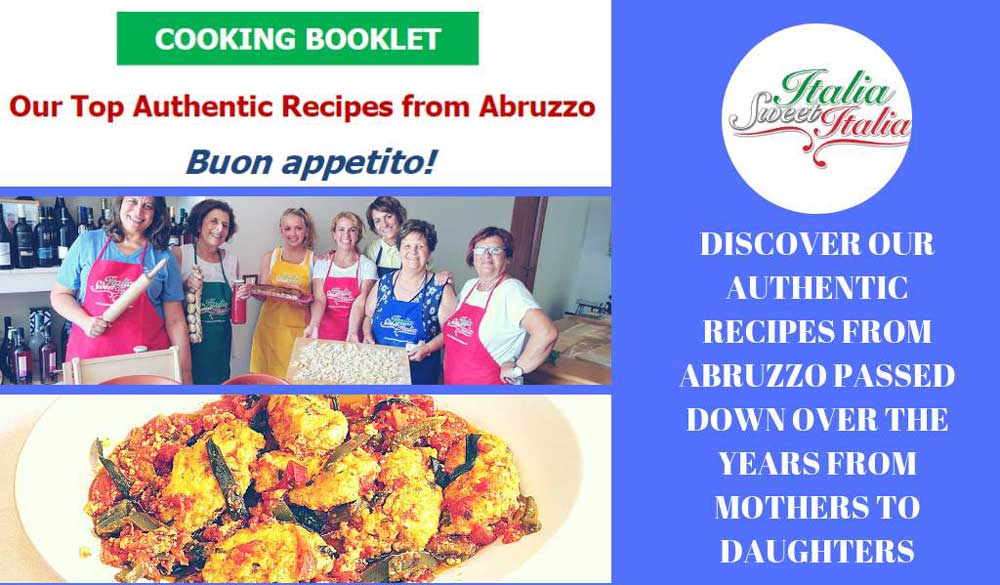
That is why cooking classes are such a meaningful part of our journeys at Italia Sweet Italia. Depending on the region and the experience, our guests may learn to prepare fresh pasta, work with traditional doughs, or discover the art of making homemade sweets. The recipes differ, but the pleasure is much the same: rolling up your sleeves, learning from someone who knows the tradition firsthand, and sharing the results around the table.
You quickly discover that making pasta is about more than following a recipe. It is about the feel of the dough beneath your hands, the small gestures that take years to perfect, and the stories that emerge while everyone works together.
And you do not have to get every shape perfect. In fact, a little unevenness is part of the charm.
When you return home, you may forget a few details of the recipe. But you are likely to remember the person who taught you, the laughter in the kitchen, and the satisfaction of sitting down to eat something you made yourself.
That is the kind of connection with Italy we hope our guests will take home with them.
8. The most important ingredient is time
You can compare pasta labels, look for bronze-drawn varieties, learn to cook al dente, and discover new regional recipes. All of these things can make your meals more enjoyable.
But the ingredient that matters most to me cannot be printed on a package.
It is time.
Time to prepare a dough by hand. Time to learn a technique from someone who has practiced it for years. Time to let a sauce simmer, share a story, or stay at the table a little longer because nobody is ready to leave.
Across Abruzzo, Puglia, Le Marche, Sicily, and Liguria, food offers a way to understand the character of a place. Each region has its own traditions, and every kitchen has something to teach us. Sometimes it is a particular pasta shape; sometimes it is a family recipe for a cake or another homemade sweet. Often, the most memorable lesson has very little to do with measurements or cooking times.
It is the pleasure of doing something together.
This World Pasta Day, why not try a new pasta shape, prepare a sauce from seasonal ingredients, or invite friends over to make fresh pasta at home? You do not need a perfect kitchen or professional skills. You just need a little curiosity and a willingness to enjoy the process.
And if you join us on a journey through Italy, you will find that these moments are part of the experience. At Italia Sweet Italia, we want our guests to do more than admire beautiful places or taste wonderful food. We want them to meet the people behind the traditions, take part in everyday life, and discover how much a simple cooking lesson can reveal about a region.
For me, that is one of the great pleasures of traveling slowly: finding a place at the table, learning something new, and leaving with a story of your own to tell.
This World Pasta Day, celebrate the pasta on your plate, but also the hands that make it, the traditions that preserve it, and the people who bring everyone together to enjoy it.
If these stories have inspired you and you would like to experience the true soul of Italy, we would love to welcome you on one of our journeys.
Visit our full calendar to discover our small-group cultural and culinary tours. Come pull up a chair, roll up your sleeves, cook alongside our local friends and family, and discover the traditions, flavors, and everyday moments that make Italy feel like home.
We look forward to sharing a place at our table with you.
Ciao for now,
Fabrizio
Ready to travel to Abruzzo, Italy?
Get in touch today for more information about our tour. We are ready to help you choose the best options for your dream vacation!
And if you’re not quite ready to make an inquiry, sign up for our free email course to learn everything you need to know about planning a tour of Abruzzo.